

When you talk to truffle dealer Luca Miliffi, you notice something quickly: truffles, especially white truffles, aren’t just a product to him. They’re a feeling. A memory. A part of his story. “Growing up in Italy, there was a truffle dealer living in our building. So during truffle season, everything smelled like them. That scent has been part of my life for as long as I can remember.”
He was just six years old when he tasted truffles for the first time. That was also when he began developing an interest in cooking – not least thanks to his grandmother, an exceptional cook with whom he spent a great deal of time. “White truffles were the only thing she used completely wrong,” he laughs. But more on that later.
Luca Miliffi was also heavily influenced by his father, Arnaldo, a former military pilot who was one of the first people to export high-quality truffles to Austria in the 1980s. “That world captivated me immediately,” the now-47-year-old recalls. “But the nicest part was that it brought us closer together. Going into the forest or out to meet farmers together was very special to me.”
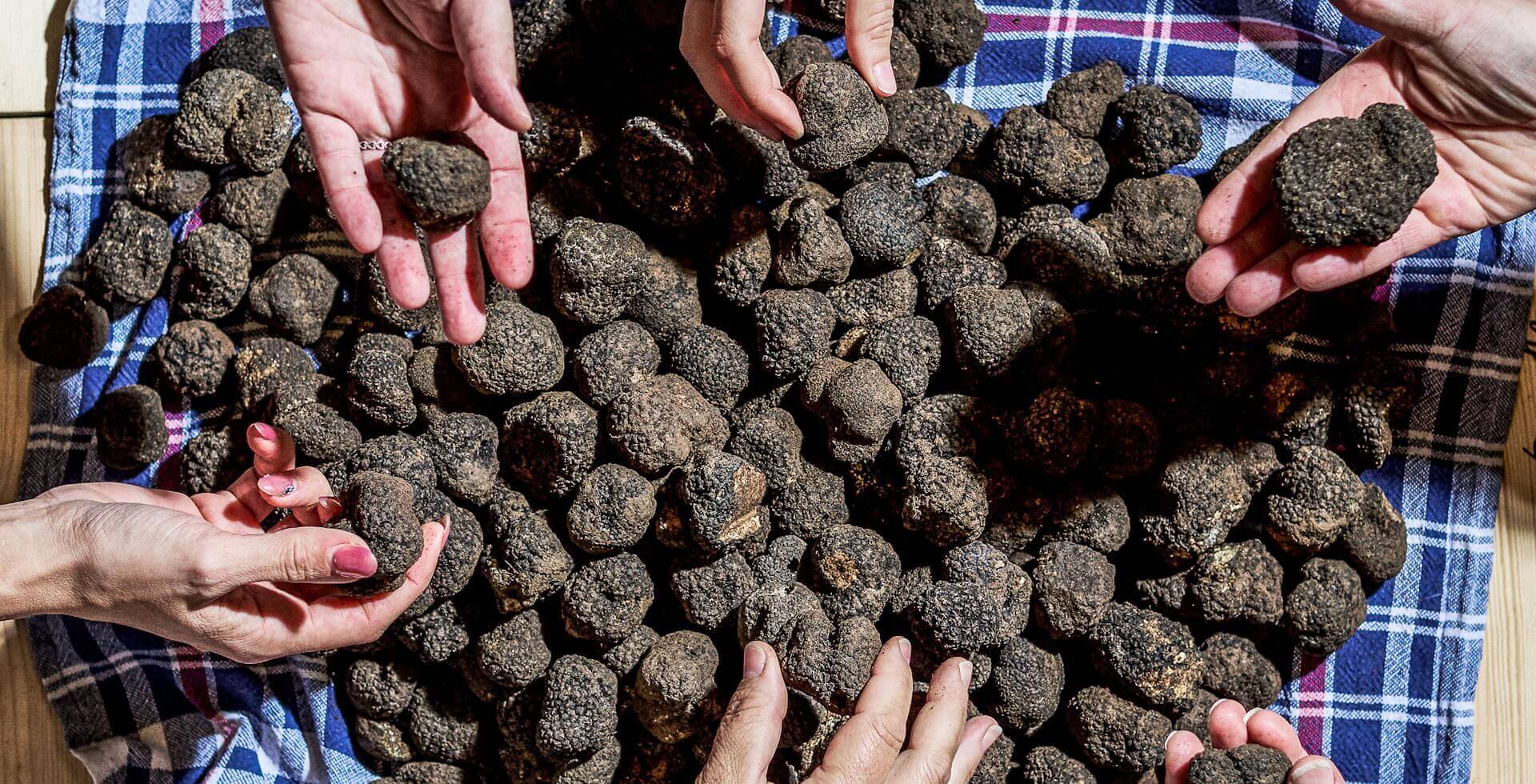
Truffles are rare mushrooms that grow underground in symbiosis with certain trees, such as oaks and hazelnuts. Dogs are traditionally used to sniff them out. Truffle pigs have been banned in Italy since the 1980s, because they cause a great deal of damage and like to eat the truffles themselves.
The best-known varieties include the white Alba truffle, which is harvested between October and December in the Piedmont region of Italy (and which is considered the world’s most expensive delicacy), and the black Périgord truffle, which grows mainly in France and the Mediterranean area. Black summer truffles, a milder alternative, are more common and therefore more affordable.
“It touches your heart before it crosses your lips”
The young Italian quickly learned how diverse these precious mushrooms are. There are more than a hundred different types of truffles in all, but only a few them are edible, high-quality, and have a culinary purpose. True culinary artistry lies in using and combining the different varieties in ways that bring out their essence. “But whatever truffle you choose,” Luca Miliffi adds in a rapturous tone, “nothing comes close to the white truffle. The scent alone conveys emotions. It touches the heart before it even crosses your lips.”
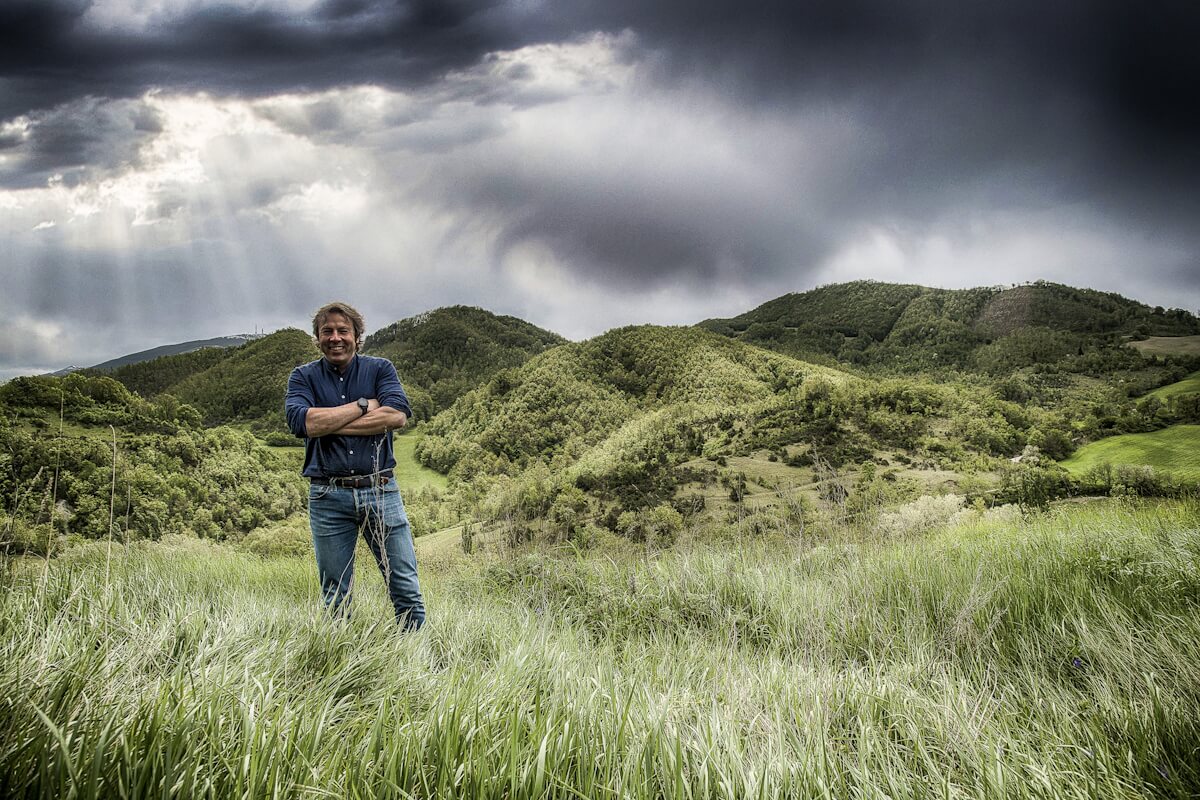
Image: Peter Mayr
Luca Miliffi has a nose for the job
Miliffi says that the joy of truffle hunting lies in the excitement and anticipation of discovering something special. But to recognize white truffles and tell good quality from bad, he explains, you have to develop a nose for it… and ideally have eaten a lot of truffles in your life already, as Luca Miliffi had. A healthy white truffle has a firm consistency with no soft spots. The outside should be cream to light-brown in color, while the inside should have flesh-colored veins running through it. And then there’s the smell: not too intense, not too sharp, not too “edgy”. “Breathe in deep,” the expert says, “and see if you can pick up on a rounded, delicate note similar to the nutty scent of a Piedmont hazelnut.”
Kitchen mistakes
Above all, aroma and flavor are what distinguish white truffles from black – and they’re also the reason why each is prepared differently. “My grandmother cooked white truffles, which I’d consider a sacrilege now,” Miliffi laughs. Unlike with black truffles, heat destroys white truffles’ flavor, so they are not cooked; instead, they are grated over the finished dish just before serving. Black truffles, meanwhile, have only a faint scent but an intense flavor, so they can be cooked.
It’s also important is to enjoy the truffle in its simplicity and highlight it instead of covering it up. “It doesn’t need fanfare. It does everything on its own, through its sheer purity.” According to Luca Miliffi, one of the most common mistakes in the foodservice industry is that cooks use too many truffle-flavored products and not enough real truffles. Another mistake is storing truffles in rice, which is hygroscopic – it draws water out. “So at the end, you’ve got a shriveled truffle and an amazing risotto rice. That’s why there was so much truffle risotto around in the 80s: everyone was storing them wrong, including us.”
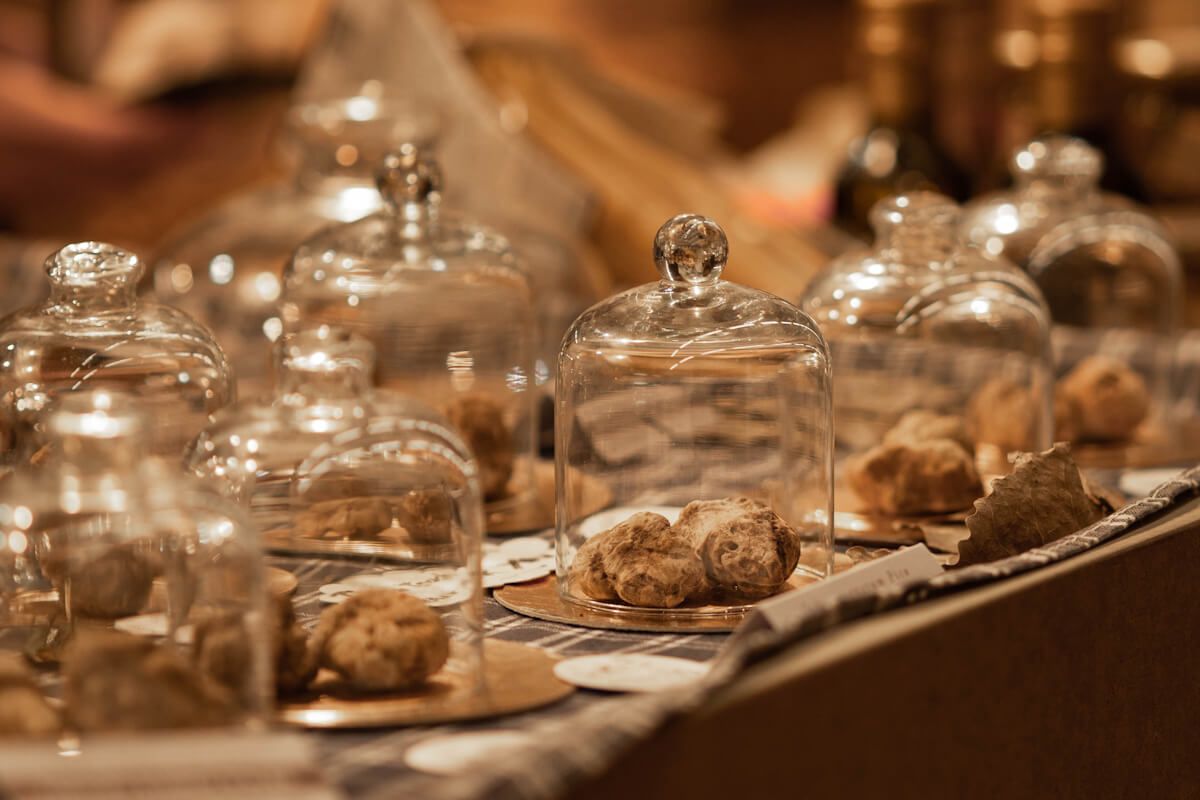
Image: AdobeStock
Symbiosis even on the plate
But even once you’ve selected and stored your truffles properly, there’s still one important question: what do you pair them with? “Truffles spend their entire lives in a symbiotic relationship with trees – they’re connected to one another, giving and receiving,” the expert explains. That harmony continues into the kitchen, where the truffle transfers its scent and flavor to the ingredients it comes into contact with. This works particularly well with eggs, fine pasta, and dairy products. Warm foods bring out its flavor most effectively. But there are a few surprising exceptions, Luca Miliffi notes. “We even combine it with crema pasticcera to create a dessert, and it works really well. But you need to know exactly what works and what doesn’t.”
“The most wonderful time of the year”
The Miliffi household only serves up white truffles three or four times per year, but they celebrate those meals to the fullest. “We start by selecting and preparing them, and then we enjoy them very mindfully.” But for the Italian, those evenings are more than culinary highlights. They’re a ritual, a tradition he’s passing on to his own children. “My daughters even say that white truffle season is the most wonderful time of the year.”