
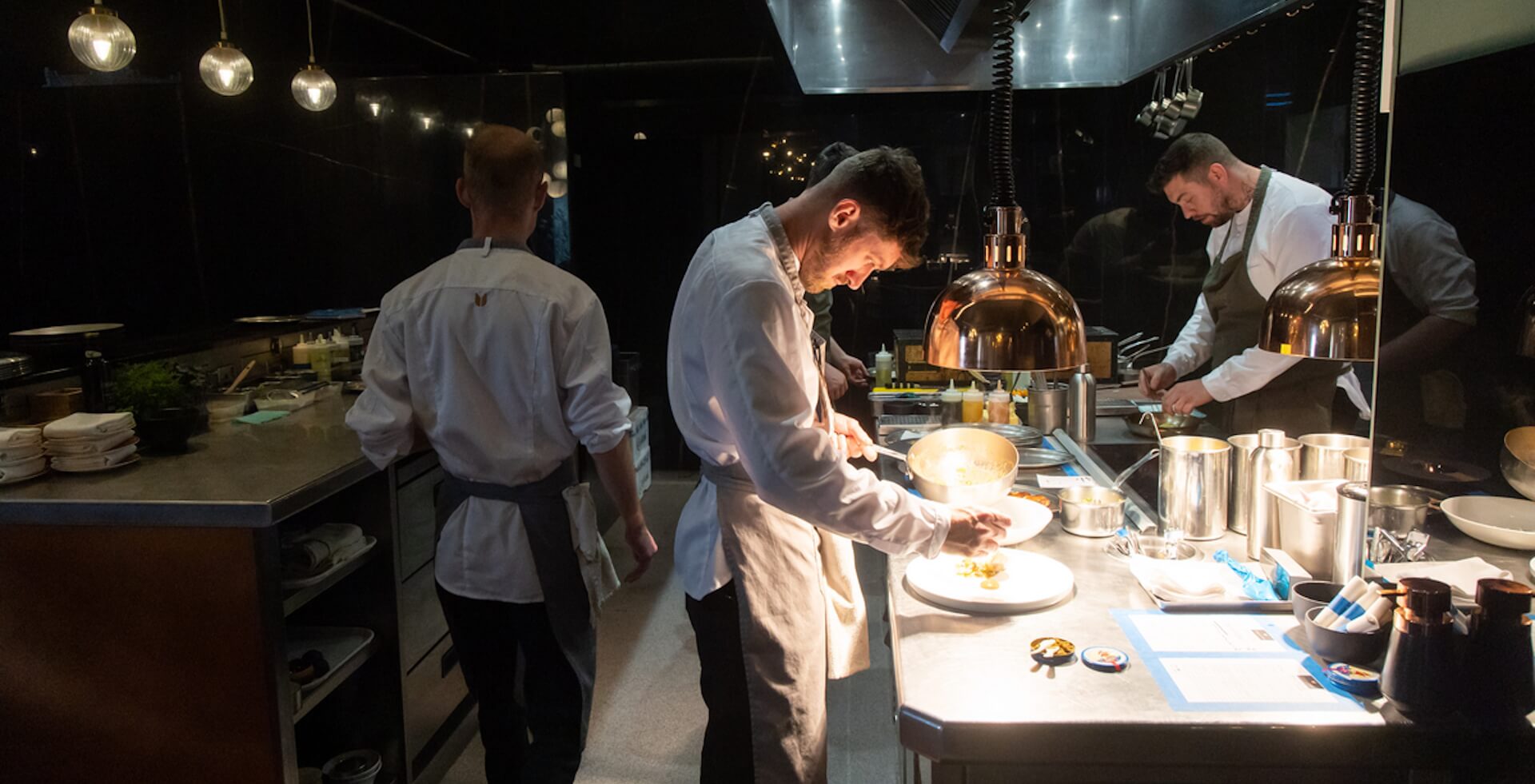
Open kitchen. Front cooking. Display cooking. Cooking in front of customers. Just a few names for a trend that’s been going strong for years and even become mainstream in some places. In system and independent gastronomy, at hot counters and bakeries, many cooking processes have shifted front-of-house.
“Customers have a greater need for authenticity, for transparency,” says Noah Birnbaum. “And a need for the preparation process to be part of the experience, rather than just the food itself.” Birnbaum, an industrial engineer with a master’s degree in facility and process design, has been responsible for commercial kitchen concepts at the Rational AG since 2024. He’s an expert on the challenges customers face when planning an open kitchen, and he’s got tips on how to overcome them.
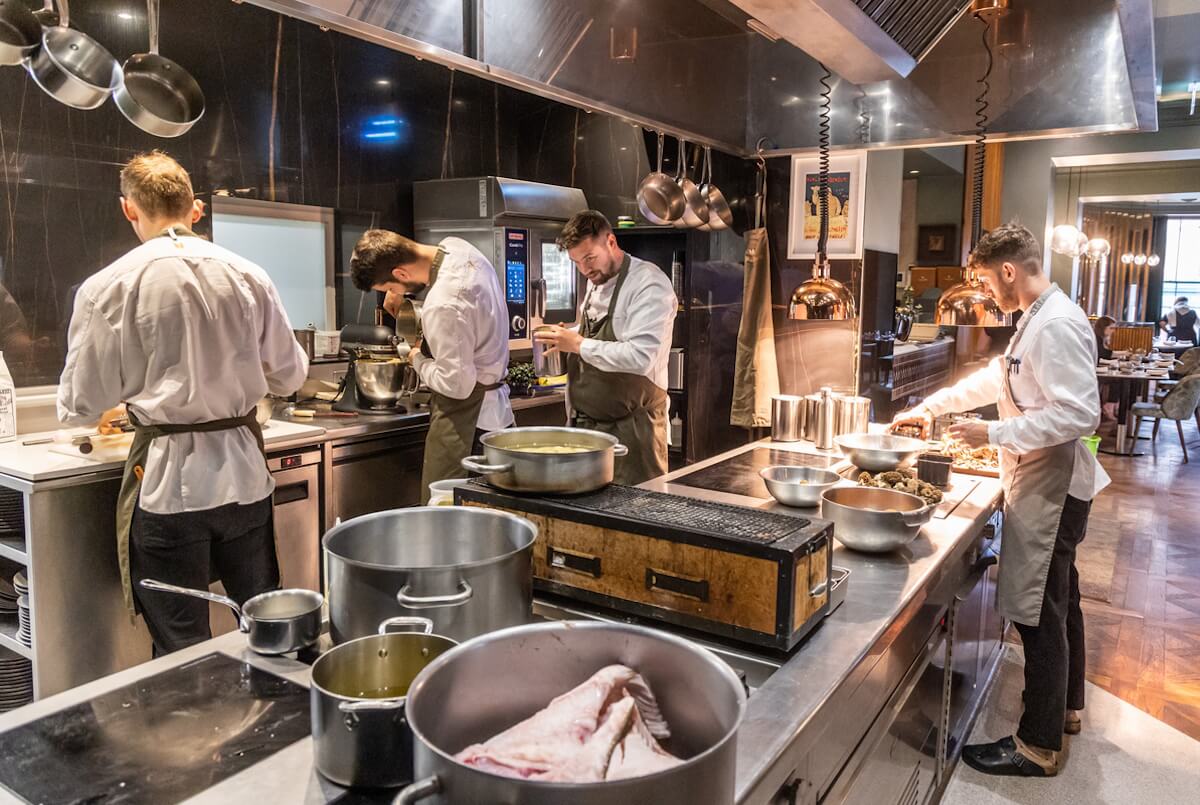
Image: Rational
Design and Functionality
“The dining area and the kitchen have conflicting requirements in terms of space,” Birnbaum says. “Above all, kitchens have to be hygienic, they have to be easy to clean. That means lots of stainless steel, lots of curves, no hard edges. In the dining area, it’s the opposite: you want vibrant materials, you want structure. Balancing those two requirements can be difficult. That’s where interior design comes in, to give the kitchen both form and function.”
In front-of-house kitchens in particular, the expert notes, the top priority is to figure out how to ensure optimum work processes while also organizing the appliances as compactly as possible. “In front cooking areas, design trumps everything, which often contradicts their purpose.”
And that’s not only true in restaurants; open kitchens are on the rise in retail, too. “More and more kiosks and shops that once only offered cold food like packaged sandwiches are branching out into hot meals. Brick-and-mortar shops need to set themselves apart from online retail, and offering food is one good way of doing that.”
Safety & Security
Whether it’s a “big” restaurant or a food truck, safety is one of the most important considerations. In front cooking, for example, working with open flames near customers can be a challenge. As Noah Birnbaum points out, however, it’s “nothing you wouldn’t already have in a regular commercial kitchen.” After all, behind-the-scenes staff need just as much protection as front-of-house personnel and customers.
Of course, injuries aren’t the only safety consideration in front cooking; diners should also be protected as well as possible from noise and odors. “Ventilation is a very important issue in open kitchens,” Birnbaum confirms. “Again, though, normal food-service kitchens also have to comply with occupational safety laws and maintain proper air quality. But in front cooking, you want to avoid bothering customers with odors to the greatest possible extent, so you have to try to either draw the air out quickly or keep it from developing in the first place.” For example, the Rational iCombi Pro offers integrated hood solutions.
However, since a certain level of noise is unavoidable regardless of ventilation, managers have to decide how much cooking to do in the back (where noise is less of an issue) and how much up front. “Interior design comes into play there, too,” Birnbaum says. “The kitchen has to be positioned such that it doesn’t disrupt overall restaurant acoustics.”
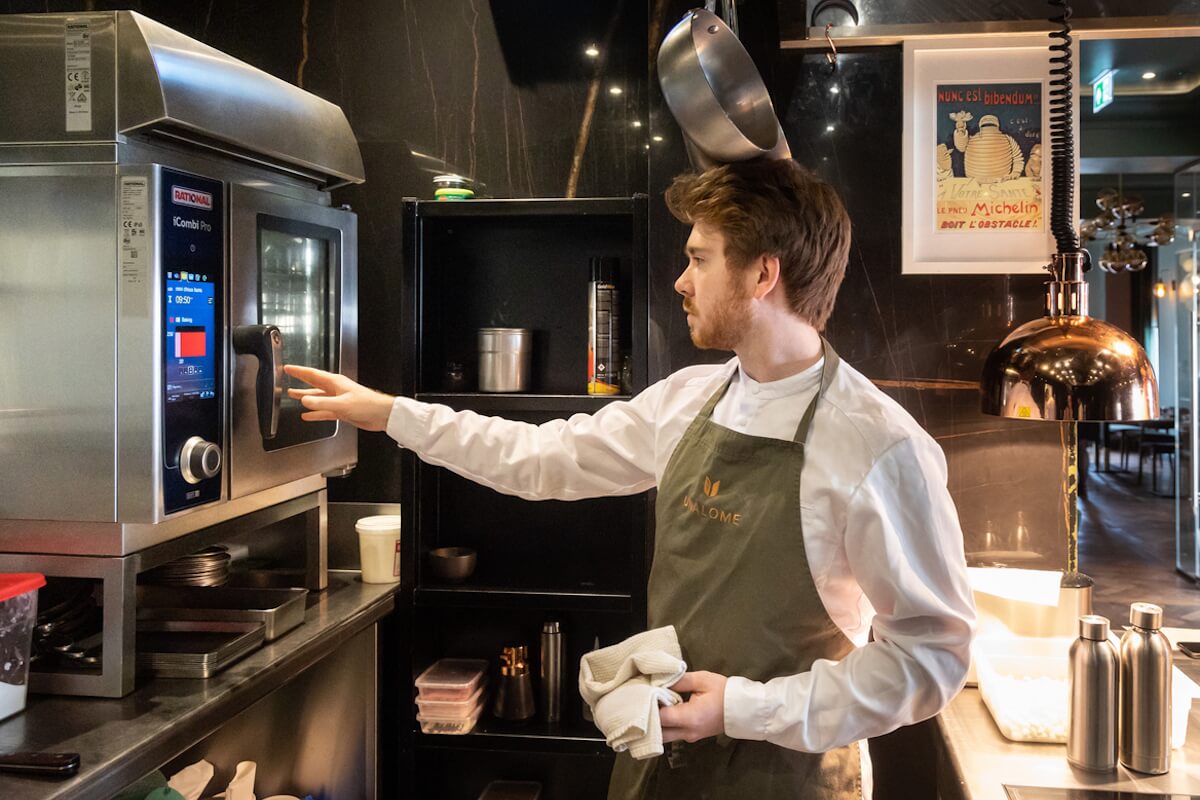
Image: Rational
Equipment & Technology
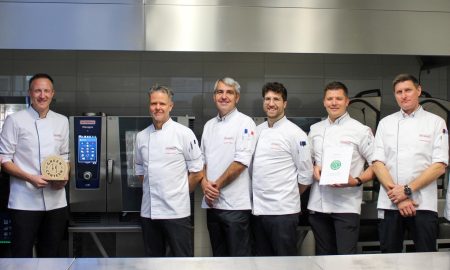
Clearly, equipment is an essential consideration in open kitchens. Rational’s iVario and iCombi cooking systems fit the bill, and not only in terms of safety. “Front kitchens need to be compact, which is why Rational appliances are ideal,” Noah Birnbaum says. The iCombi Pro XS can even be integrated into the wall, for example. Another advantage for small food-service operations: the cooking systems are easy enough to use that sales staff can prepare or finish dishes.
Of course, Birnbaum notes, “every restaurant with front cooking still has another kitchen in the background for support.” Many establishments only add finishing touches in front of customers. “As a kitchen consultant,” the expert says, “I recommend larger, multifunctional cooking systems such as the iVario, which can produce food properly behind the scenes. Depending on the size of the company, I might also recommend a smaller appliance in the front cooking area.” In a restaurant serving 50 to 80 meals per day, for example, an iCombi Pro XS would be completely sufficient for crisping or finishing.
“In general, Rational technology can help to minimize personnel costs through automation,” Birnbaum says in conclusion. “But restaurateurs should bear in mind that front cooking areas often mean extra logistical efforts.”